
Medically Reviewed by Dr. Carolyn Jovanovic, DDS on August 4, 2026
Teeth Whitening Aftercare: What to Avoid and What to Do Next
Right after teeth whitening, your enamel is temporarily more porous, which means the first two days determine how long your bright results last. Steering clear of dark, acidic, and heavily pigmented foods and drinks, brushing gently, and using a desensitizing toothpaste if needed all help lock in your new shade. Mild tooth sensitivity is common in the days that follow and usually fades on its own, but a few simple habits around hydration, touch-up trays, and oral hygiene make the difference between a smile that stays bright and one that dulls within weeks.
At Montgomery Park Dental, we walk every Conroe patient through this aftercare window after in-office and take-home whitening treatments alike, because the results of professional teeth whitening are only as lasting as the care that follows them. Below, we cover what to avoid, what to do instead, and when a quick call to our office is worth making.
Protect Your Smile During the First 48 Hours
Although your results look instant, the first 48 hours after whitening are the most important for locking in a brighter smile. During this window, your enamel is more receptive to color, so a few precautions go a long way. Brush gently with a soft-bristled brush and a non-abrasive toothpaste, rinse with water after meals, and skip drinks that are very hot or very cold to minimize sensitivity. If sensitivity does show up, a desensitizing gel or toothpaste used as directed can help.
We also recommend following a simple “white diet” for the next couple of days: choose light-colored foods and drinks that will not stain, such as water, milk, plain yogurt, eggs, chicken or turkey, cauliflower, rice, pasta, and bananas. Keep seasonings gentle, such as salt, olive oil, or a light cream sauce, and skip colorful sauces like tomato or soy. A helpful rule of thumb is to ask whether a food or drink would stain a white shirt; if the answer is yes, wait a day or two before having it. Avoid tobacco and colored mouthwashes during this window, and if you notice uneven color on a crown, filling, or other restoration, that is normal, since whitening lightens natural enamel but not dental materials. Call our office if anything feels off.
Why Whitened Teeth Are More Sensitive to Stains and Sensitivity
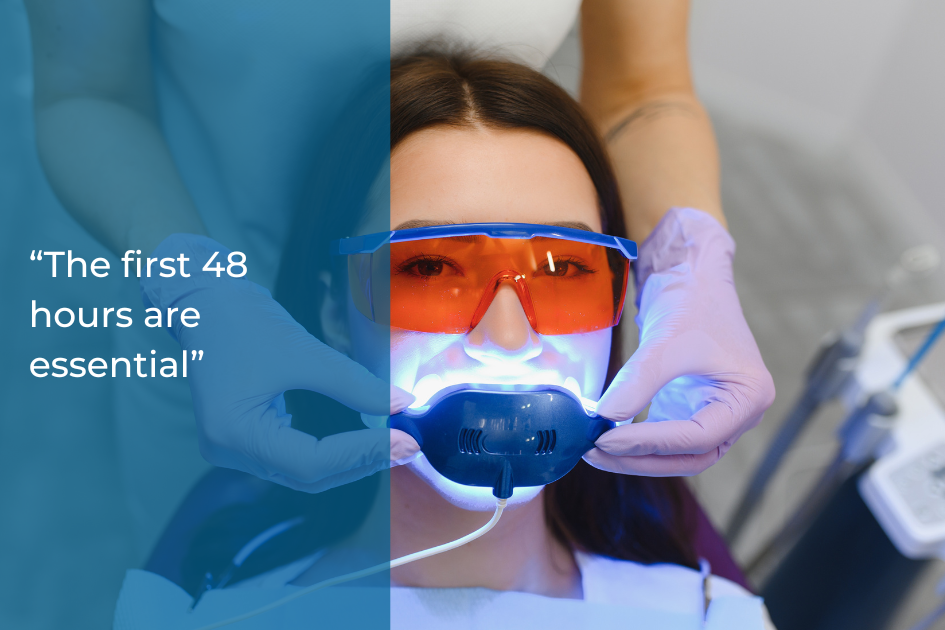
Whitening works by allowing a bleaching agent to pass through the enamel and reach stains trapped below the surface. That process temporarily opens tiny pores in the enamel and softens the protective layer that normally shields your teeth from everyday pigments and temperature changes. According to the American Dental Association, temporary tooth sensitivity is a common side effect of whitening and can affect a significant share of patients in the days immediately following treatment, though it typically resolves within a few days. Those same open pores are also why your teeth are more prone to staining right after whitening, since pigments from coffee, tea, or wine can settle in more easily than they would on unwhitened enamel. Giving your enamel 48 hours to reseal itself before returning to your normal diet and habits is the simplest way to protect both your comfort and your results.
Avoid Tobacco, Coffee, Tea, and Red Wine
For the brightest, longest-lasting results, steer clear of tobacco, coffee, tea, and red wine for at least 48 hours after whitening. These stain-causing substances can penetrate freshly opened enamel pores and dull your new shade quickly.
Choose clear water, milk, or other “white diet” options instead. If you must have coffee or tea later, drink it through a straw, keep it brief, and rinse with water immediately afterward. Avoid mouth rinses with color, and do not smoke or vape, since both deposit pigments and slow healing. Planning ahead helps: brew a decaf alternative, keep sugar-free gum on hand, and reach out to our team if you are ever unsure whether something is safe to have.
Manage Sensitivity With Desensitizing Products and Fluoride Rinses
After whitening, brief zingers or a dull ache are common and typically fade within a day or two. Choose lukewarm foods and drinks over anything extreme in temperature, and take an over-the-counter pain reliever as directed if you need one. Avoid highly acidic items such as citrus, soda, and vinegar-based foods, since these can sting freshly whitened teeth. Brush gently with a soft-bristled brush using small circles and light pressure, stay hydrated, and skip alcohol-based mouthwashes while your enamel settles. If sensitivity lingers beyond 72 hours, contact our office and let Dr. Jovanovic know.
A desensitizing toothpaste containing potassium nitrate or stannous fluoride, used twice daily and left on the teeth for about a minute before rinsing, calms the nerve pathways beneath the enamel and helps ease lingering zingers. Adding a neutral sodium fluoride rinse once a day, ideally at night, reinforces that effect, and we also offer in-office fluoride treatments for patients who want extra support while their enamel recovers. Swish the rinse for 60 seconds, then spit; avoid eating, drinking, or rinsing with water for 30 minutes afterward so the fluoride has time to absorb. If discomfort flares up, dab a pea-sized amount of desensitizing toothpaste directly on the sensitive spot and leave it in place. Most patients notice steady relief within several days.
Maintain Results With Gentle Oral Hygiene and Hydration
Even as your smile brightens, gentle daily care keeps it that way. Brush twice a day with a soft-bristled brush and a non-abrasive, whitening-safe toothpaste to avoid scratching the enamel, and floss once daily to clear stain-catching plaque along the gumline. When you use take-home trays, follow the instructions precisely and avoid overfilling them to protect your gums.
A few small habit changes make gentle hygiene easier to stick with:
- Choose a soft brush head and replace it every three months or whenever the bristles splay.
- Use an alcohol-free mouthwash that is enamel-safe to support a balanced oral environment.
- Clean your trays with cool water and mild soap; never use hot water, which can warp them.
We’ll schedule regular checkups to monitor your shade and overall oral health at each visit.
Hydration plays a bigger role in stain prevention than most people expect. Sipping water throughout the day and swishing gently after meals, coffee, tea, or wine dilutes the pigments and acids that can dull a new shade before they have a chance to set. Keep a refillable bottle nearby, use a straw for dark drinks, and rinse with water within a minute of finishing anything you enjoy in color. When brushing is not possible, a 20 to 30 second water swish is a reasonable substitute. Consistent hydration supports saliva flow, protects enamel, and helps preserve brighter results over time.
Use Custom Trays and Take-Home Whitening Gel as Directed
After your in-office whitening, custom trays and take-home gel help you maintain results between visits. Use a pea-sized amount of gel per tray arch, seat the trays fully, and wipe away any excess from your gums. Wear them for the exact time recommended, never longer, and brush and floss beforehand so the gel reaches the enamel evenly. If sensitivity occurs, skip a day or switch to a desensitizing gel in the trays for that session, and store the trays in their case with the gel capped and kept cool between uses.
If you are using a Zoom! take-home whitening kit rather than trays fitted after an in-office visit, the same aftercare habits apply: rinse after removal, then avoid dark foods and drinks for about two hours while your enamel resets. Following the schedule your dentist recommends, rather than whitening more often than advised, protects both your enamel and your results over the long run.
Schedule Regular Dental Checkups and Cleanings
Twice-yearly checkups and cleanings help lock in your whitening results and keep stains from creeping back. We remove plaque and tartar that brushing alone misses, polish away surface discoloration, and track how your shade holds up over time. At each visit, we also review your home care routine, confirm that your take-home trays still fit well, and suggest touch-up timing if needed.
Try to schedule cleanings before appointments slip. Aim for every six months as a baseline; if you drink coffee, tea, or wine often, consider moving to three or four month cleanings instead. Between visits, brushing twice daily with a non-abrasive toothpaste and flossing nightly protects your investment and keeps your smile bright.
Know When to Contact Your Dentist for Help
Mild sensitivity after whitening is common and usually fades on its own, but certain signs mean it is worth reaching out sooner rather than later. We would rather answer a quick question than have you wait out something that needs attention.
Reach out if you notice persistent pain or zingers that last more than 48 hours, especially if the discomfort is getting worse rather than better. Gum irritation, swelling, or white patches that do not improve within a day are also worth a call, as are uneven color changes, unexpected spots, or new sensitivity to biting pressure.
Call our office if you are ever unsure. We can adjust your take-home trays, review your gel strength, or rule out a cavity or crack that whitening simply made more noticeable. When in doubt, it is always better to reach out.
Dr. Carolyn Jovanovic and the team at Montgomery Park Dental have guided Conroe patients through whitening aftercare for years, and we know that the difference between a smile that stays bright and one that fades quickly usually comes down to those first 48 hours. Whether you completed an in-office Zoom! treatment or started a take-home kit, we can help you build an aftercare routine that fits your habits, and you’re always welcome to ask our team about current whitening offers if a touch-up is due.
Ready for personalized guidance or a quick touch-up plan? Contact Montgomery Park Dental in Conroe, TX, for tailored recommendations from our team, or simply schedule a post-whitening check.
Frequently Asked Questions About Teeth Whitening Aftercare
How long should I avoid coffee, tea, and red wine after whitening?
Plan to avoid coffee, tea, and red wine for at least 48 hours after whitening, since your enamel is more porous during this window and absorbs pigment more easily. If you cannot skip them entirely, drink through a straw, keep the exposure brief, and rinse with water right away. Waiting the full 48 hours gives you the best chance of protecting your new shade.
Why do my teeth feel sensitive after whitening?
Whitening opens tiny pores in the enamel so the bleaching agent can reach stains below the surface, and those same open pores can leave the nerve pathways temporarily more exposed to hot, cold, and pressure. This sensitivity is common and usually fades within a day or two on its own. A desensitizing toothpaste or fluoride rinse can help speed up your comfort while your enamel settles.
What foods are safe to eat during the first 48 hours after whitening?
Stick with light-colored, non-acidic foods such as water, milk, plain yogurt, eggs, chicken or turkey, rice, pasta, cauliflower, and bananas. A simple test is to ask whether the food or drink would stain a white shirt; if it would, save it for later. Keep seasonings light as well, choosing salt, olive oil, or a light cream sauce over tomato or soy-based options.
How often can I use my take-home whitening trays for touch-ups?
Follow the touch-up schedule your dentist recommends rather than whitening more often than advised, since overuse can irritate your enamel and gums. Many patients do well with an occasional touch-up every few months, especially if they drink a lot of coffee, tea, or wine. Bring your trays to your regular checkup so we can confirm they still fit and suggest timing that fits your habits.
When should I call the dentist about whitening side effects?
Call our office if sensitivity or discomfort lasts more than 48 hours, especially if it seems to be getting worse instead of better. Gum irritation, swelling, or white patches that do not improve within a day are also worth a call, along with any uneven color changes or new sensitivity to biting pressure. When in doubt, it is always better to check in than to wait it out.
How long do teeth whitening results typically last with good aftercare?
Results vary by person and by habits, but many patients enjoy their brighter smile for several months to a couple of years before considering a touch-up. Staying consistent with the white diet in the first 48 hours, using take-home trays as directed, and keeping up with regular checkups and cleanings all help extend how long your results hold up.
About the Author
Dentist, Montgomery Park Dental
Dr. Carolyn Jovanovic is a dentist at Montgomery Park Dental in Conroe, Texas. She earned her DDS from New York University College of Dentistry, where she completed an honors program in implant dentistry, and finished a general practice residency at the Washington, D.C. VA Medical Center.